
GALLERY UNUM PRESENTS ONE PIECE AT A TIME
A NEW IS EXHIBITED ONLY AFTER THE LAST HAS SOLD
RARE - CURATED - QUIETLY PRESENTED
THE ART OF ONE

JOSEPH MARIA OLBRICH
2ND SECESSION EXHIBITION (VIENNA, 1898)
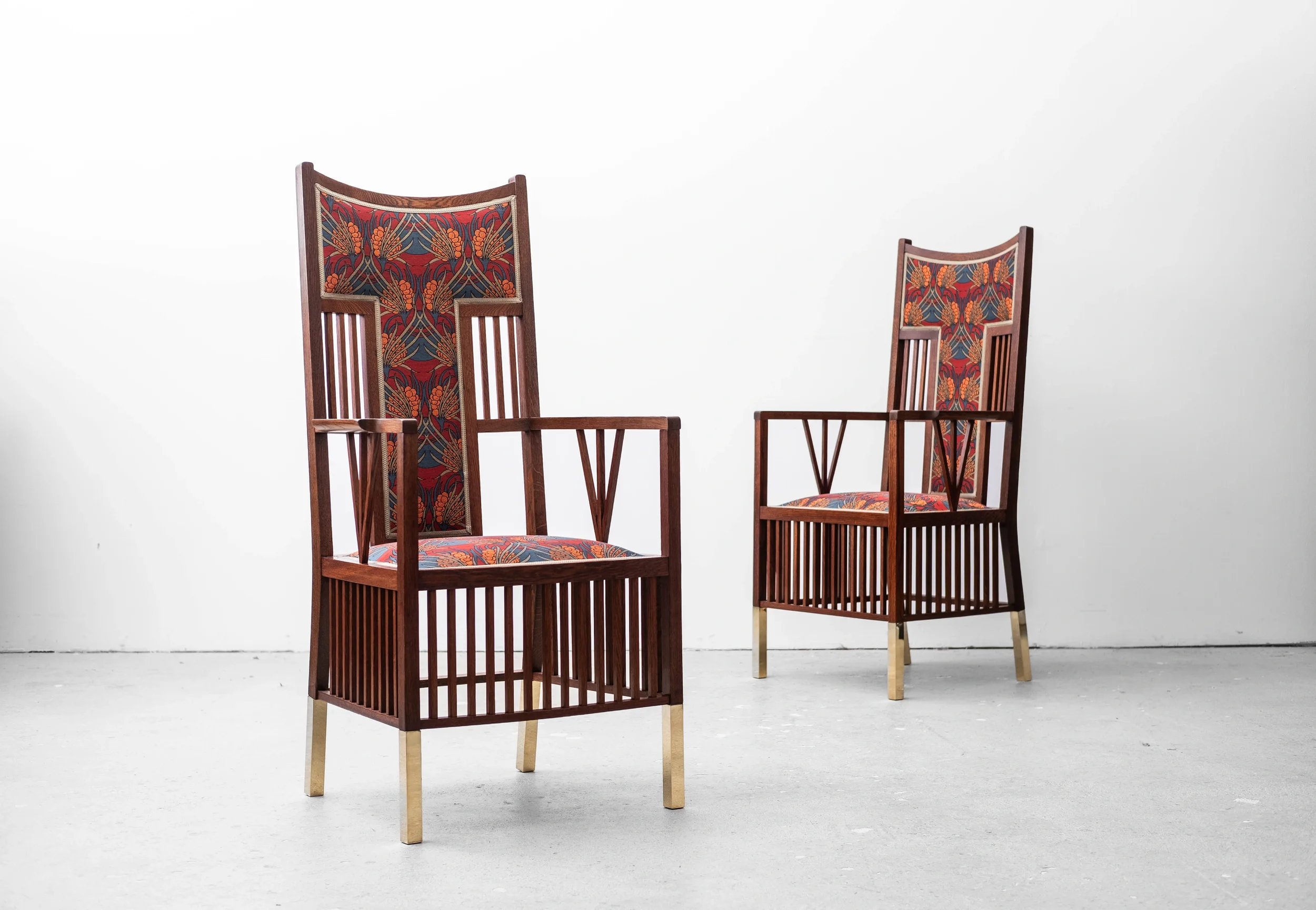
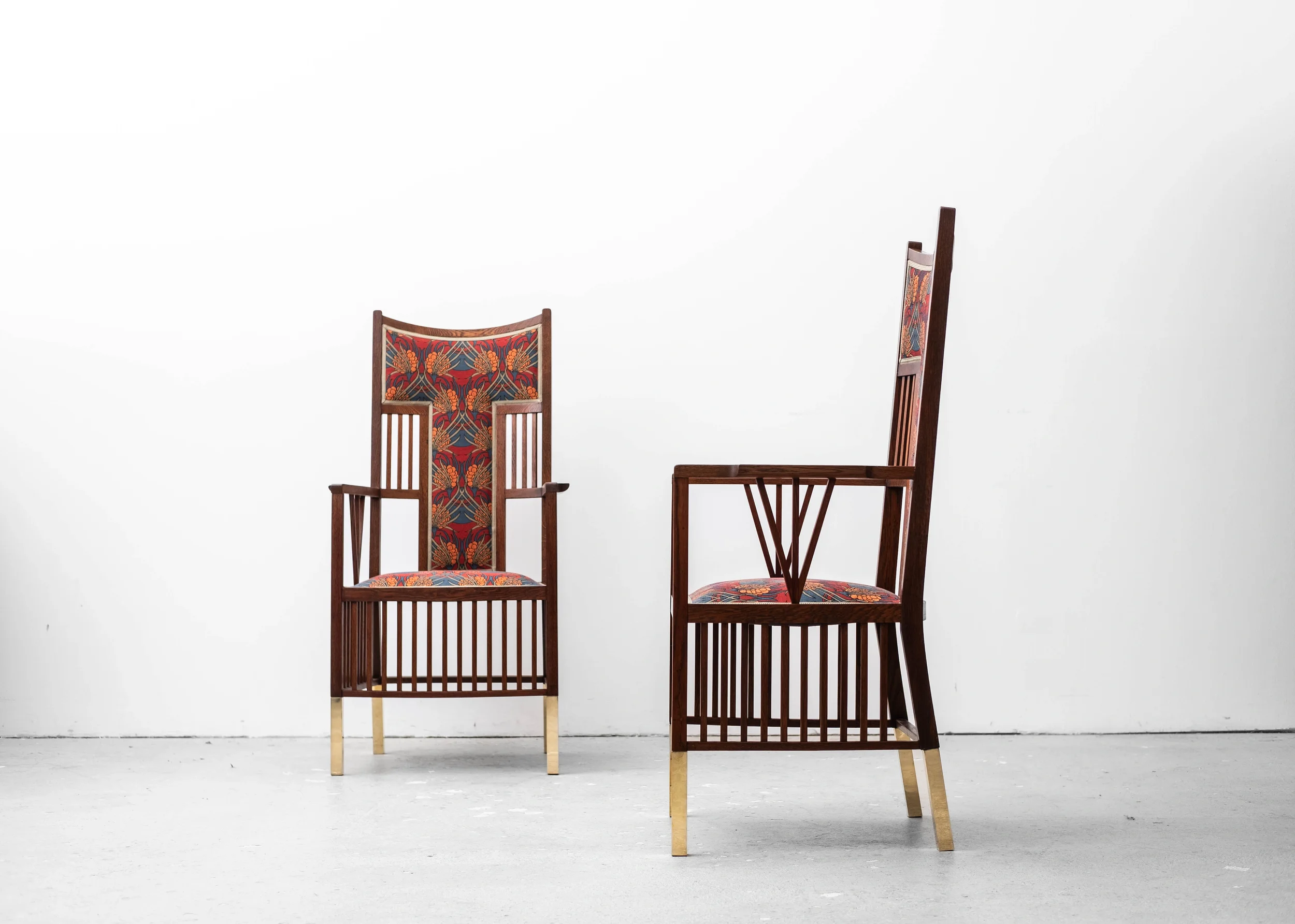
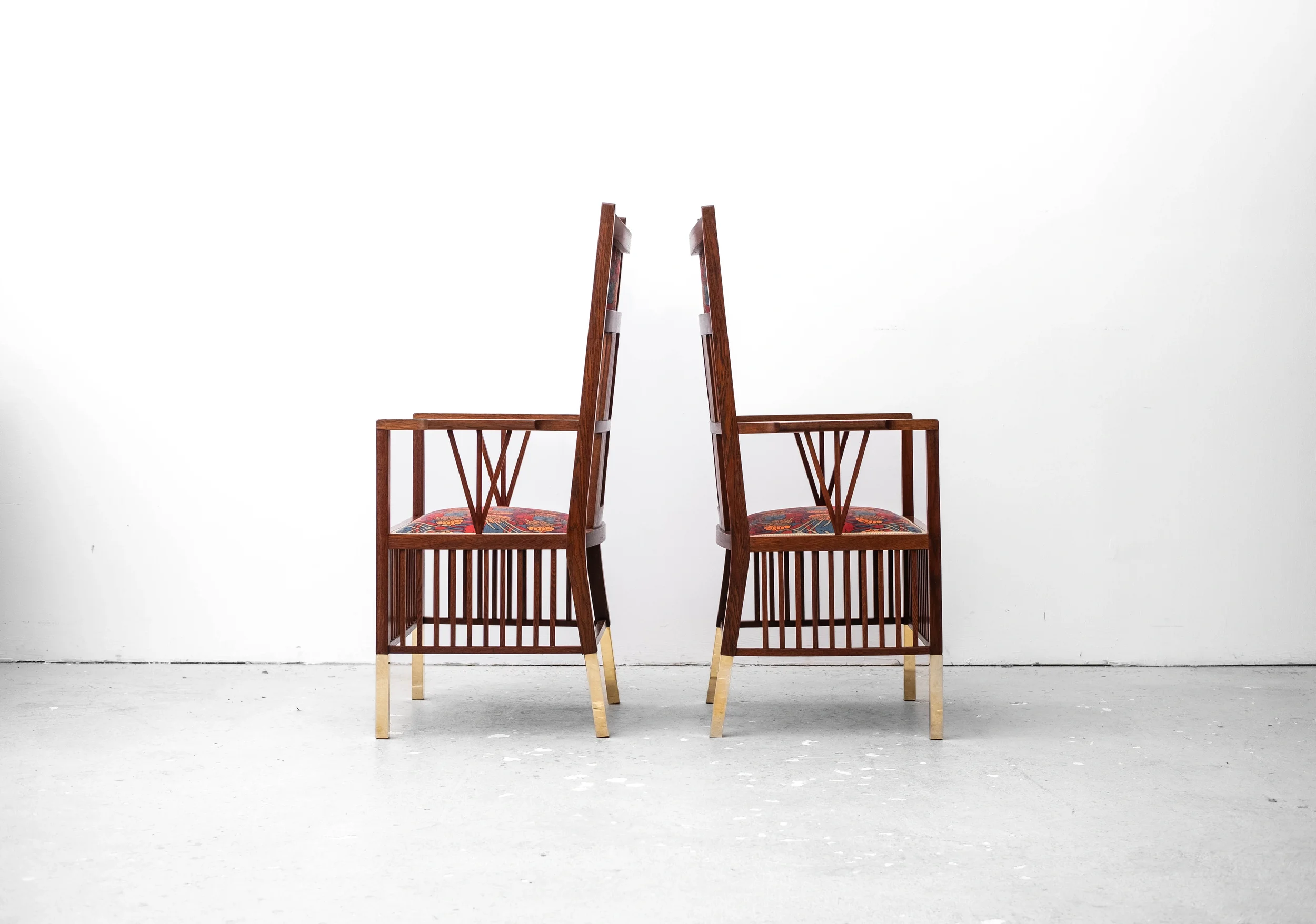
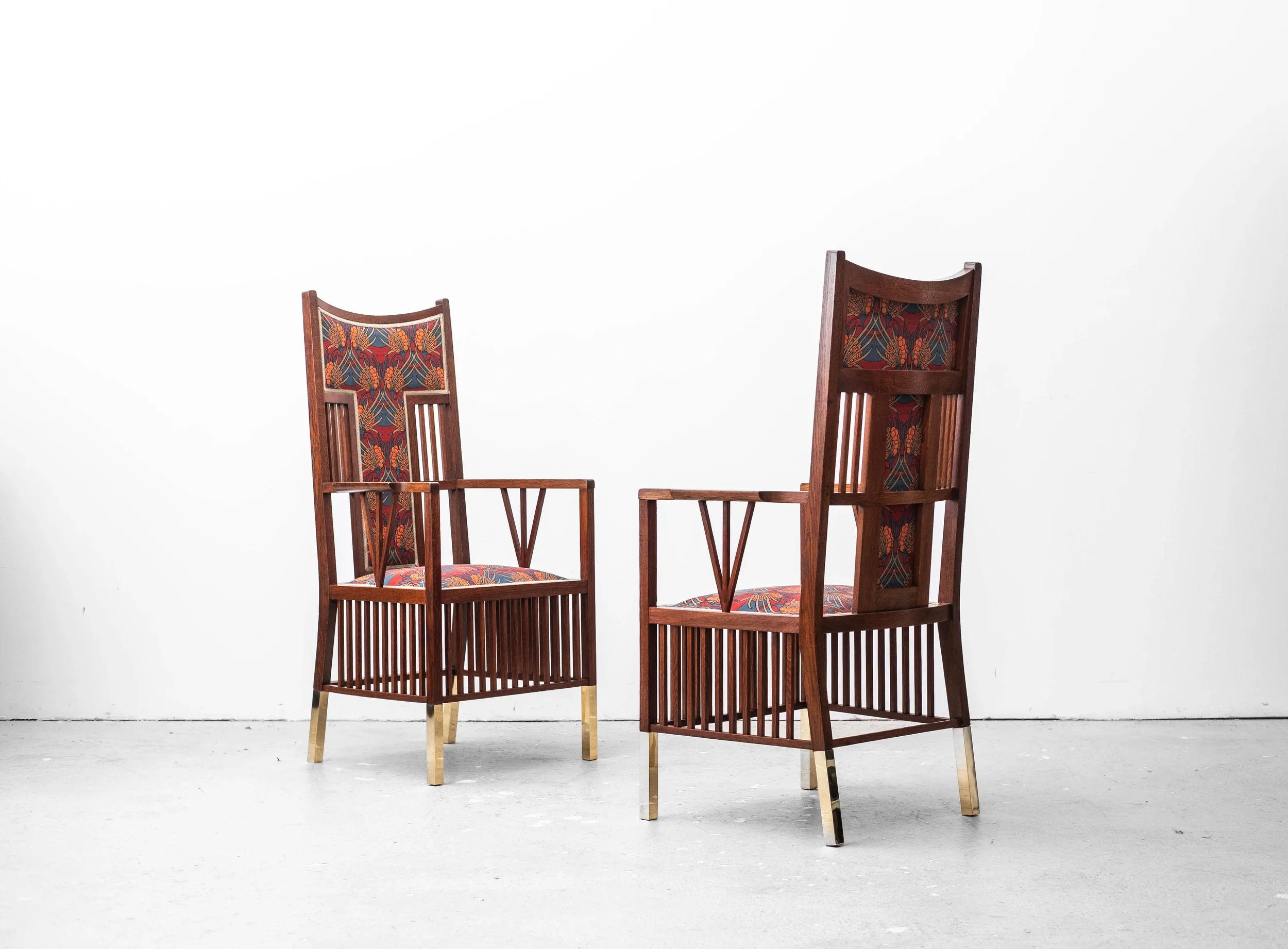
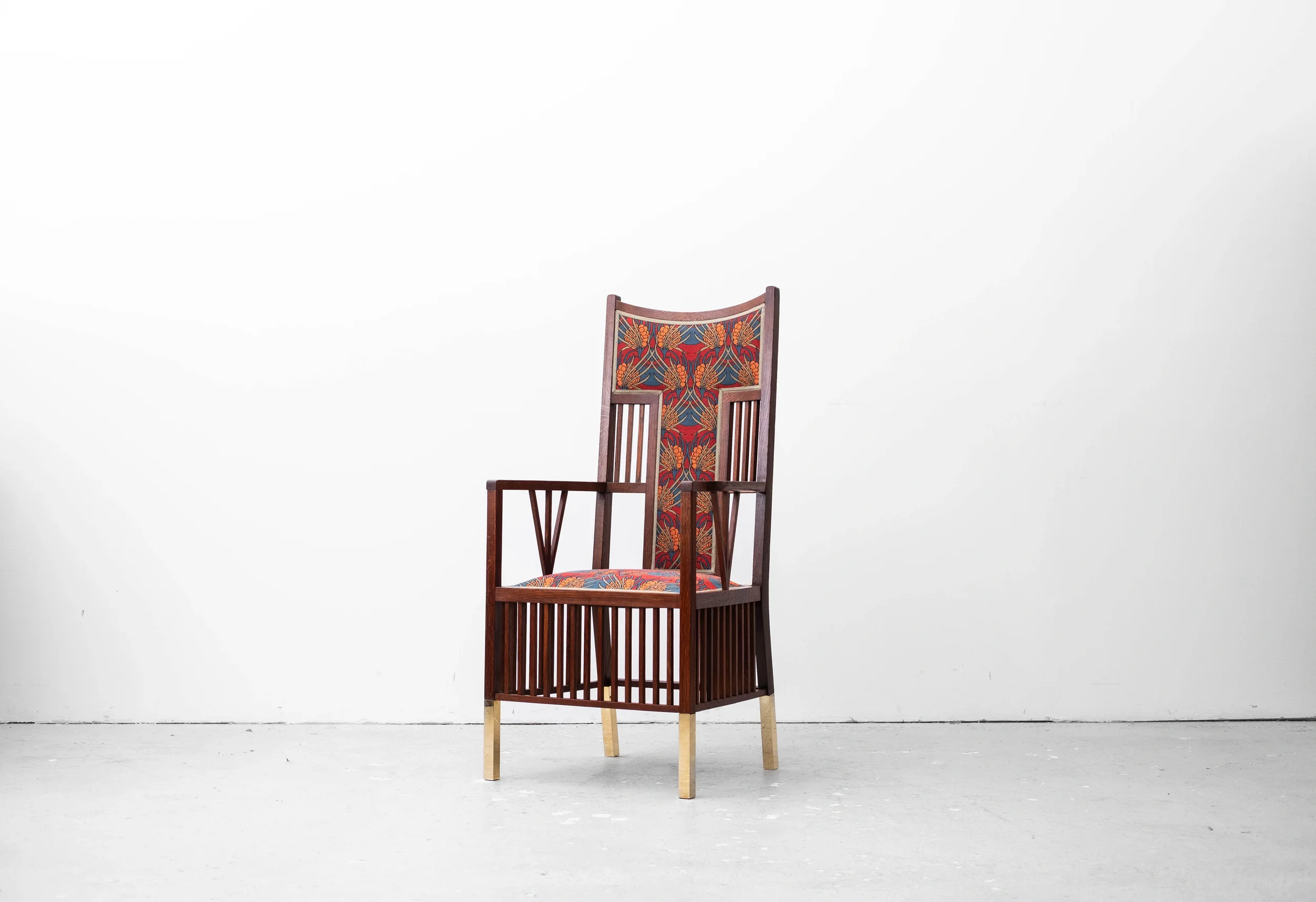
Pair of Armchairs
OBJECT 1




PRICE ON REQUEST - VIEWING BY APPOINTMENT (1010 Vienna)
First public presentation: BRAFA Art Fair, 25.1.2026 – 1.2.2026 (Booth 147, Florian Kolhammer)
These armchairs were conceived as part of a collaborative project between Galerie Traudes Kinder and Florian Kolhammer – art since the turn of the 20th century. Gallery Unum participated as an external partner and selected these armchairs as the inaugural object presented on its own platforms.
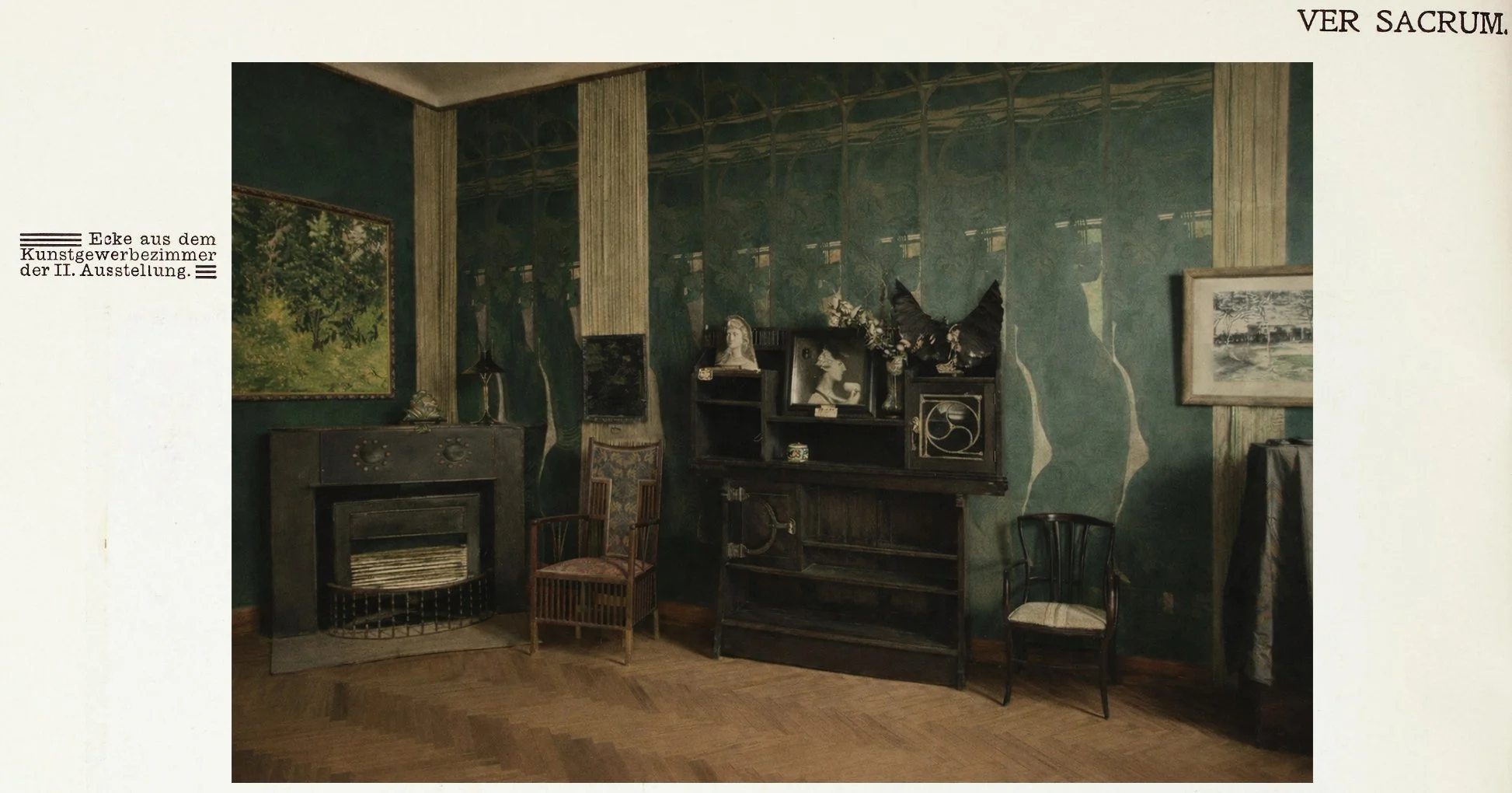
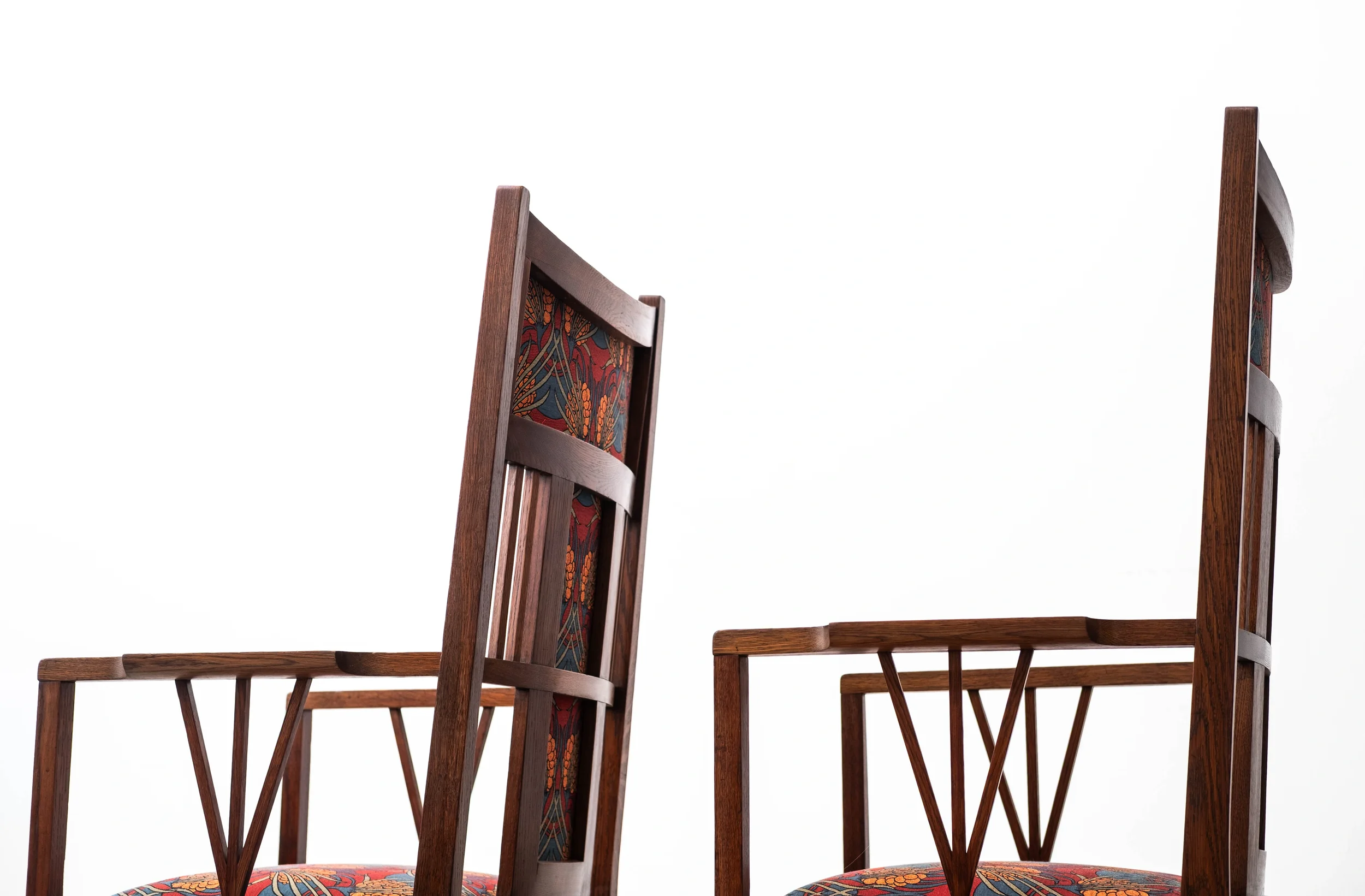
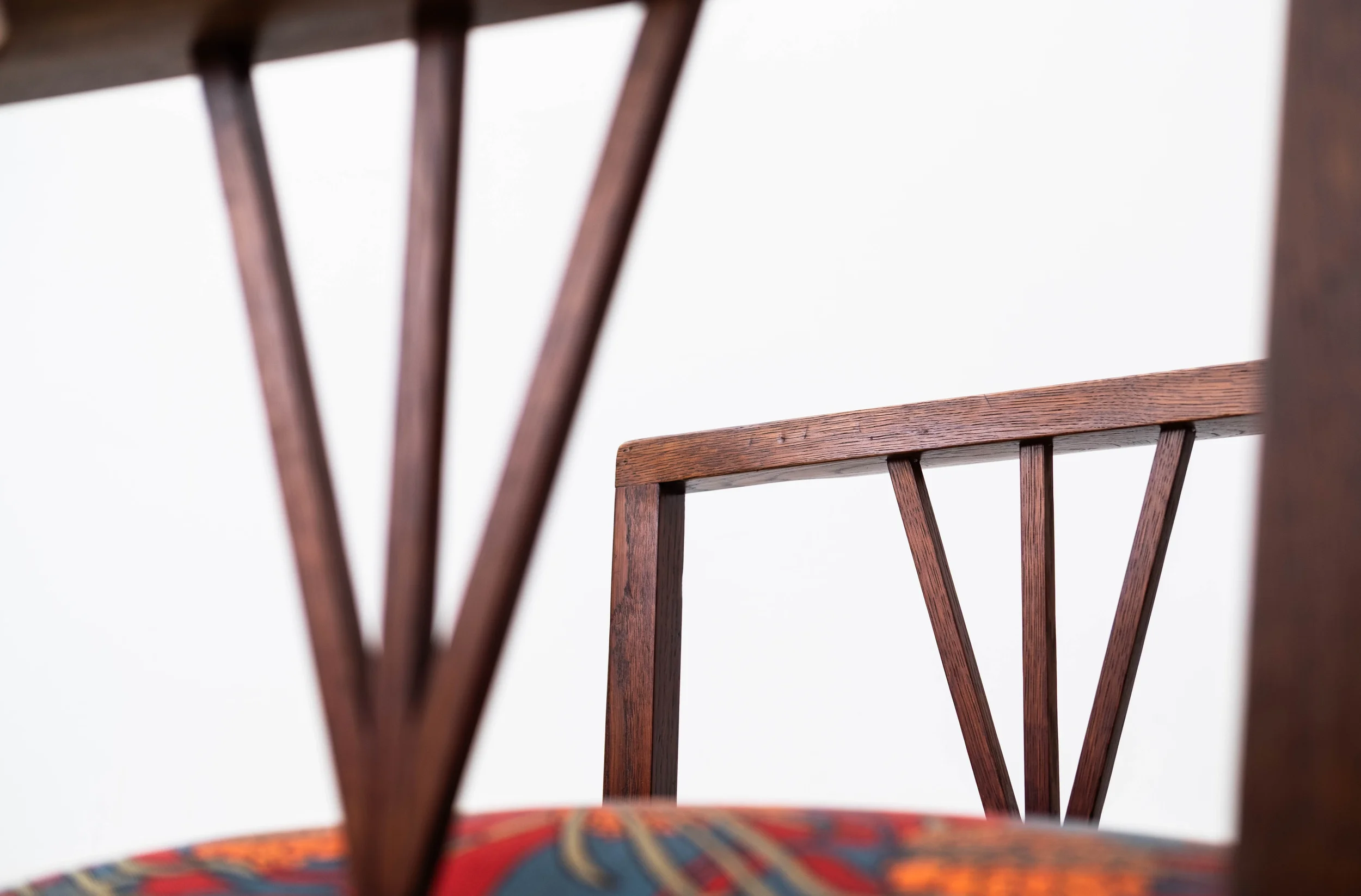
Designed in 1898 for the 2nd Exhibition of the Vienna Secession, the chairs were presented in the newly opened Secession building — the very first exhibition to take place within the purpose-built temple of modernity that Olbrich himself had conceived, and thus the most momentous exhibition in the history of the movement, a true point of departure. This structure itself stood as a manifesto for renewal. Within its walls, in the “Kunstgewerbezimmer” these pieces first took their place. It was a space conceived not merely to display objects, but to dissolve the old division between art and everyday life. Here, Olbrich’s armchairs rose in strict, architectural clarity: tall backs that hint at thrones, disciplined verticals that create a sense of order, and a calm tectonic presence that aligns with the Secession’s aim to build a new visual language for a new century.
They are more than historical designs — they are among the most precious remnants of Joseph Maria Olbrich’s short but incandescent Viennese chapter. His time in the city was strikingly brief: in 1899, scarcely a year after these chairs were conceived, he left Vienna to lead the newly founded artists’ colony on the Mathildenhöhe in Darmstadt. Because of this early departure, Austrian works by Olbrich are extraordinarily rare. What remains from his Viennese period is a small constellation—few objects, each one carrying the intensity of a beginning. These armchairs, created on the threshold of that departure, belong to Vienna’s own Ver Sacrum: a moment in which ideas blossomed rapidly, urgently, as though aware that time was short.
Their geometry is resolute, but never cold. Beneath the austerity lies a perceptible sense of transition—an atmosphere of a world shifting, of forms seeking renewal. They embody the spirit of Ver Sacrum, the “holy spring,” the symbol with which the Secession declared its belief in rebirth and artistic liberation. In their stature, one senses the early pulse of modernity—still measured, still rooted in craft, yet already leaning toward the future.
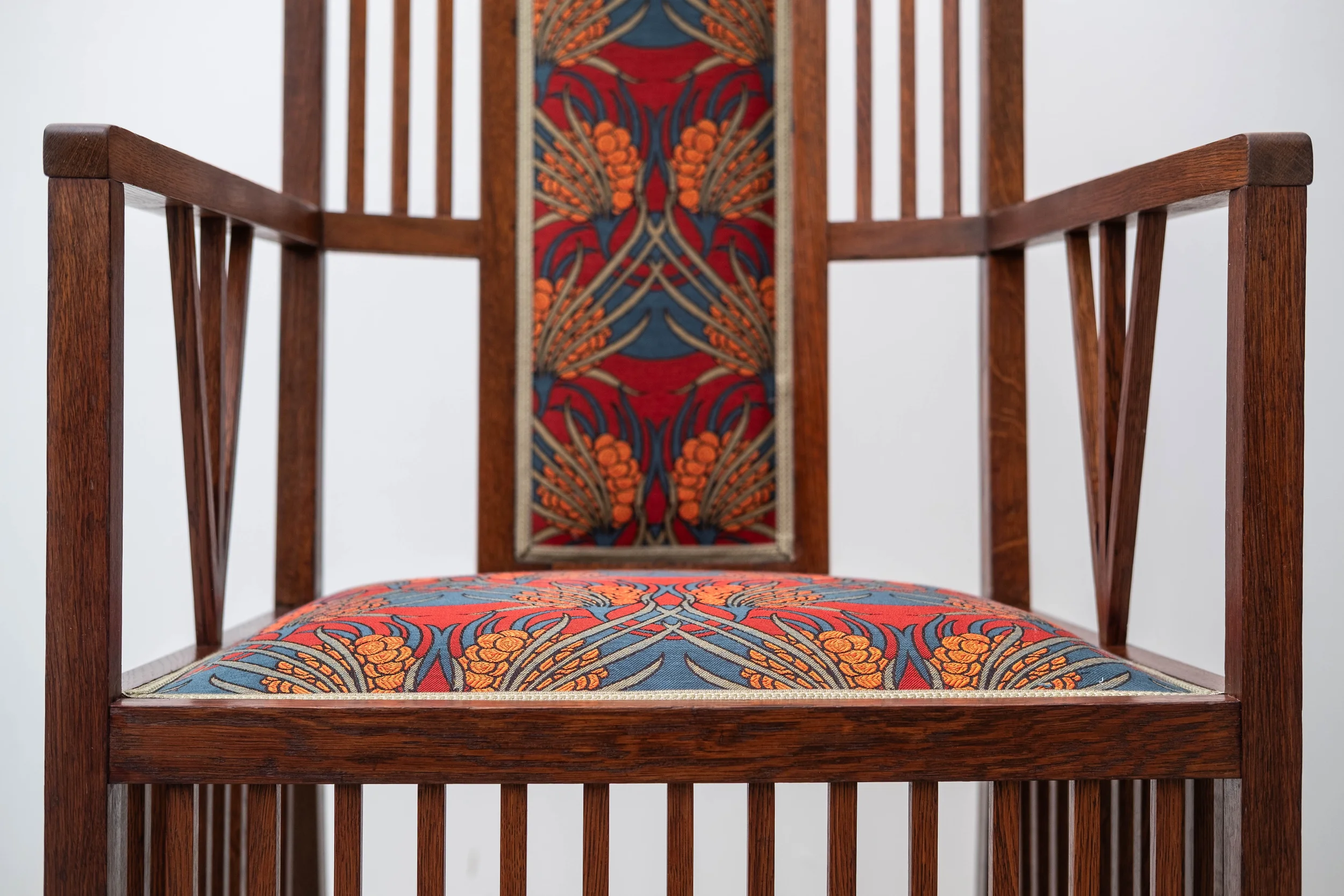
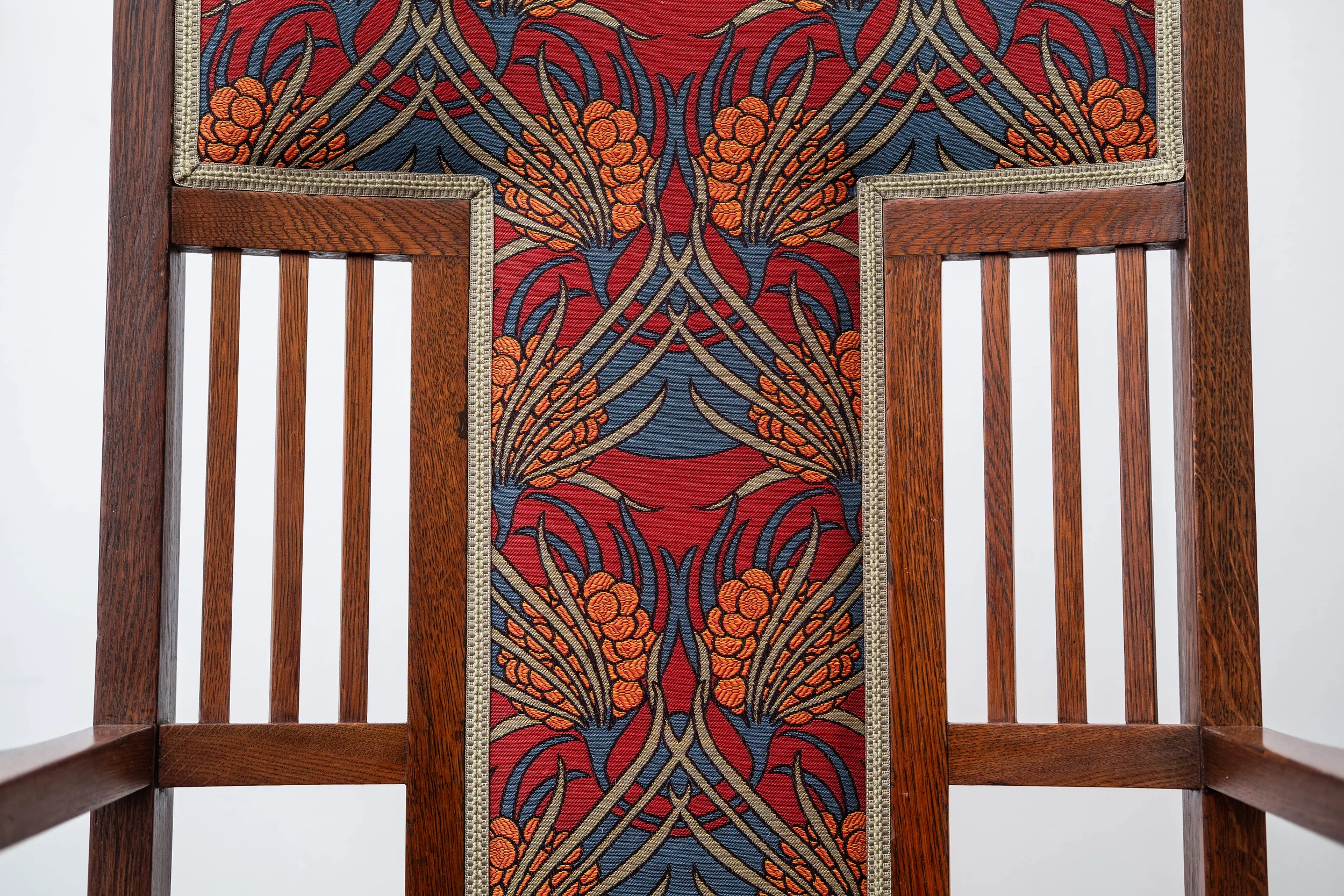
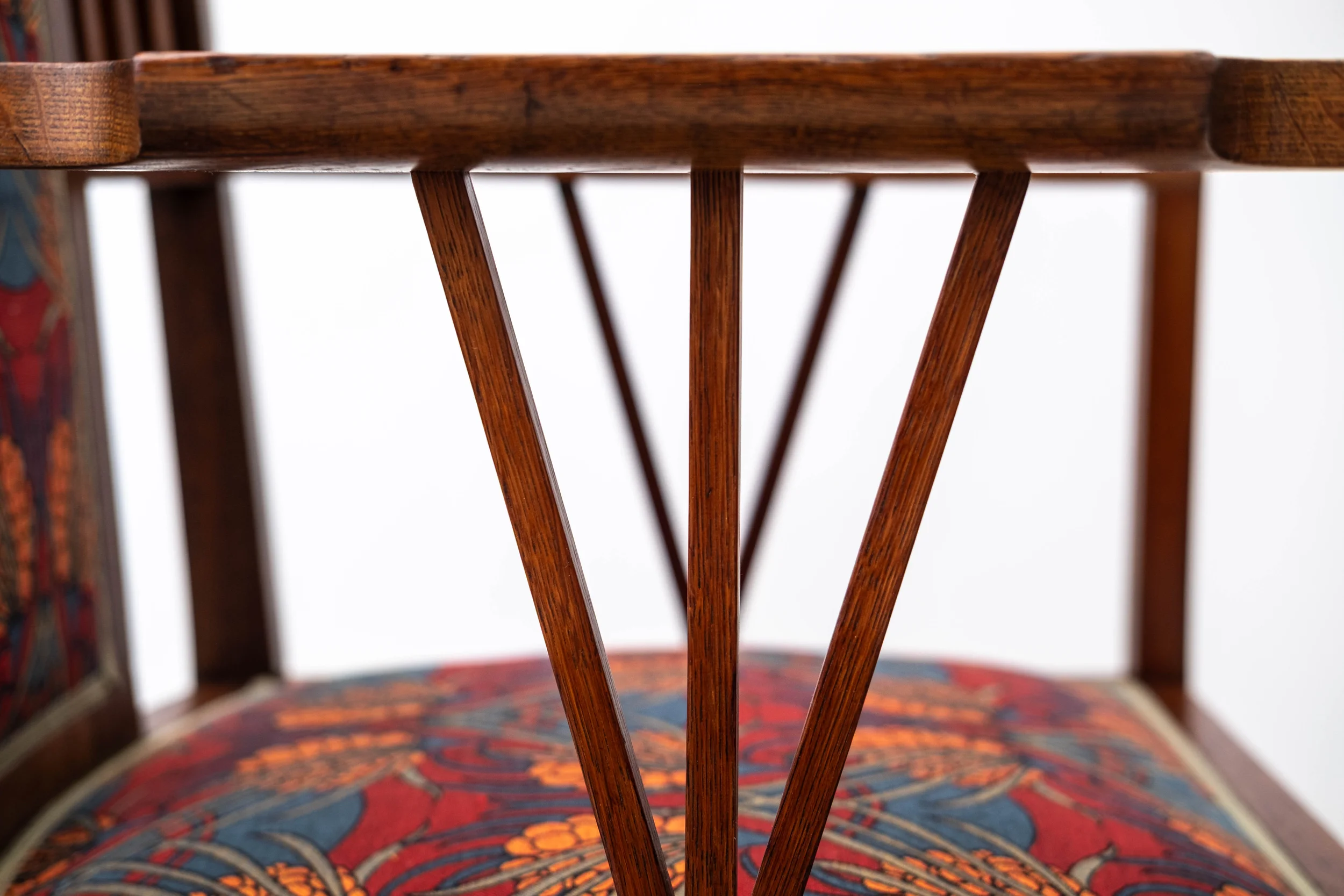
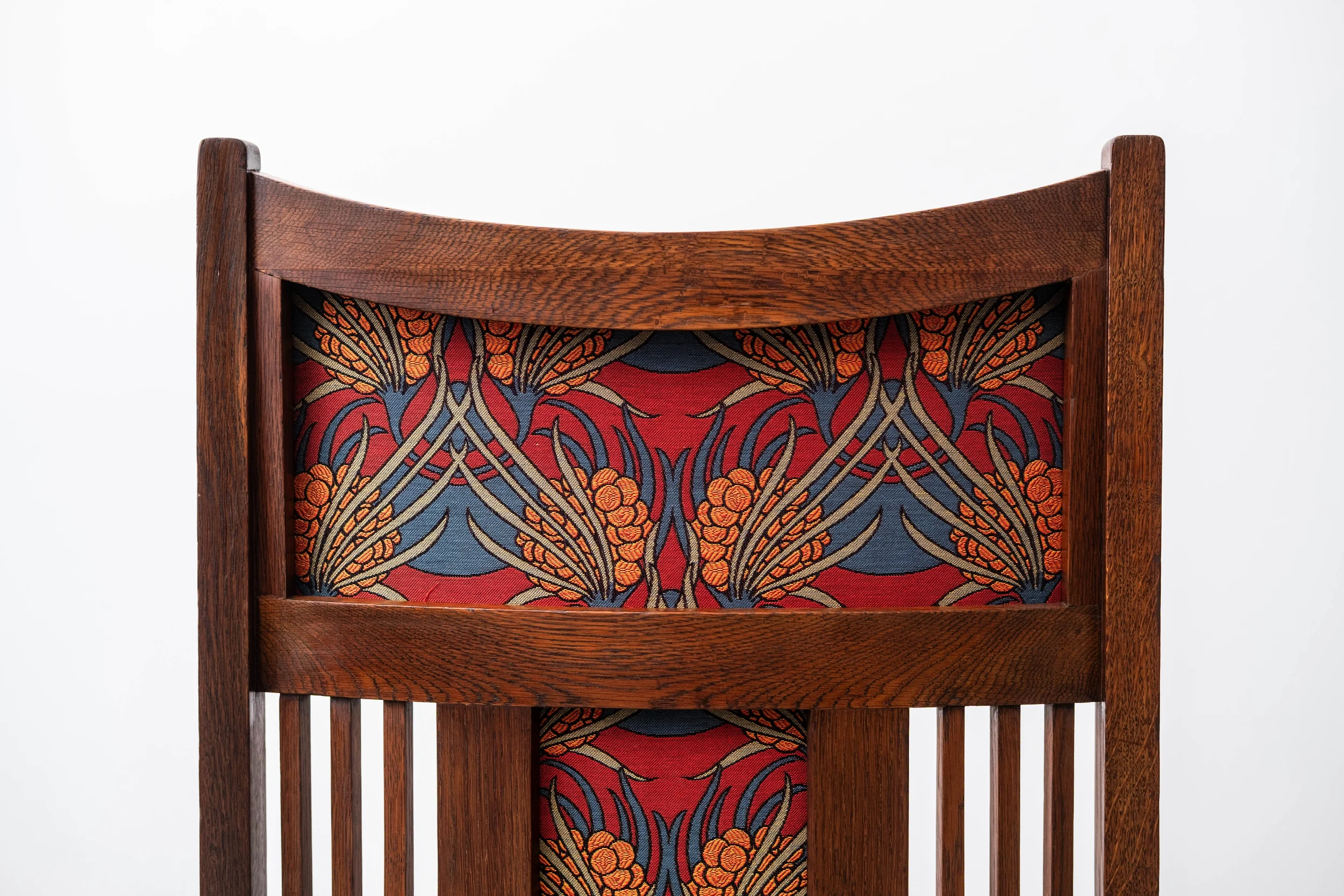
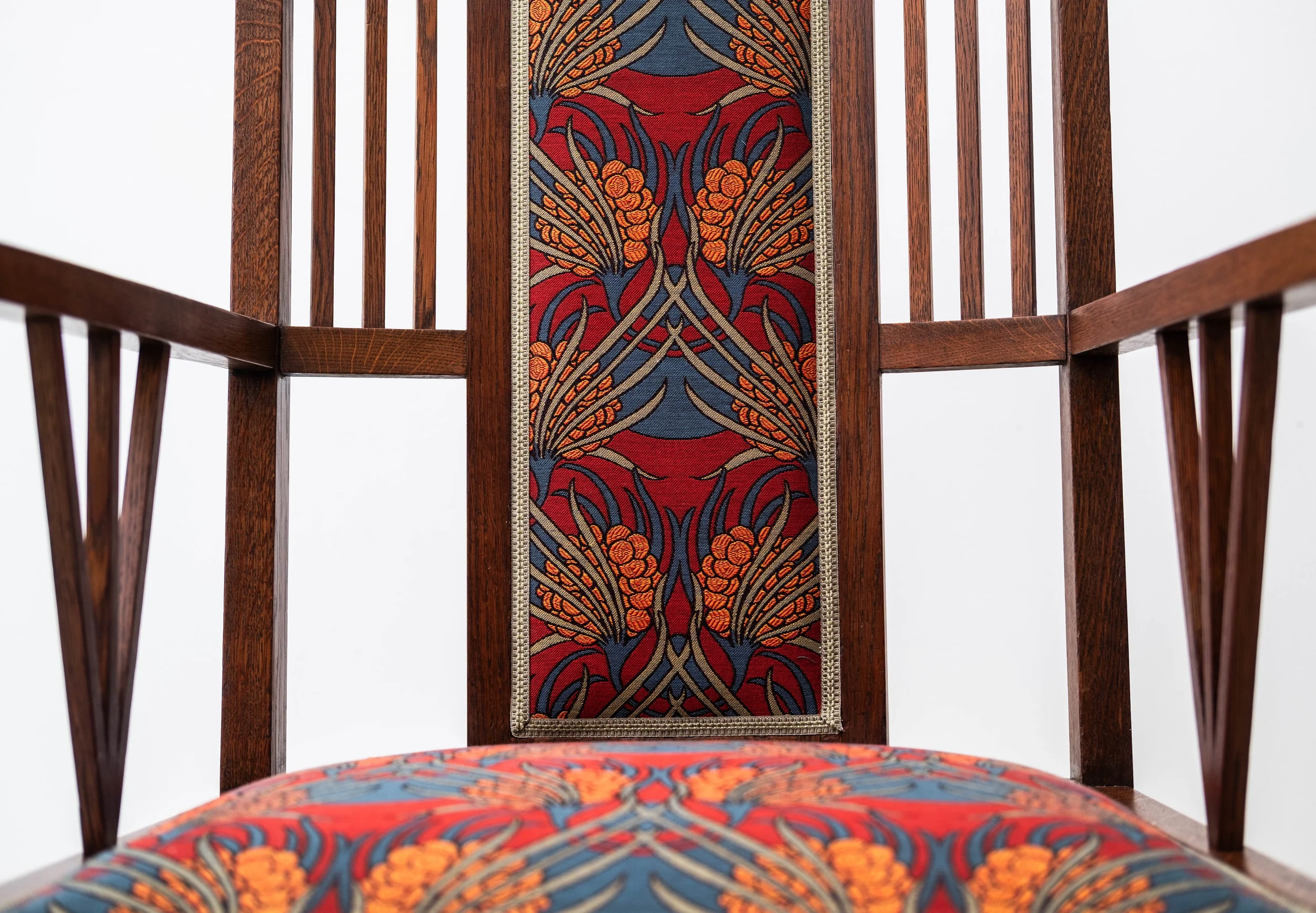
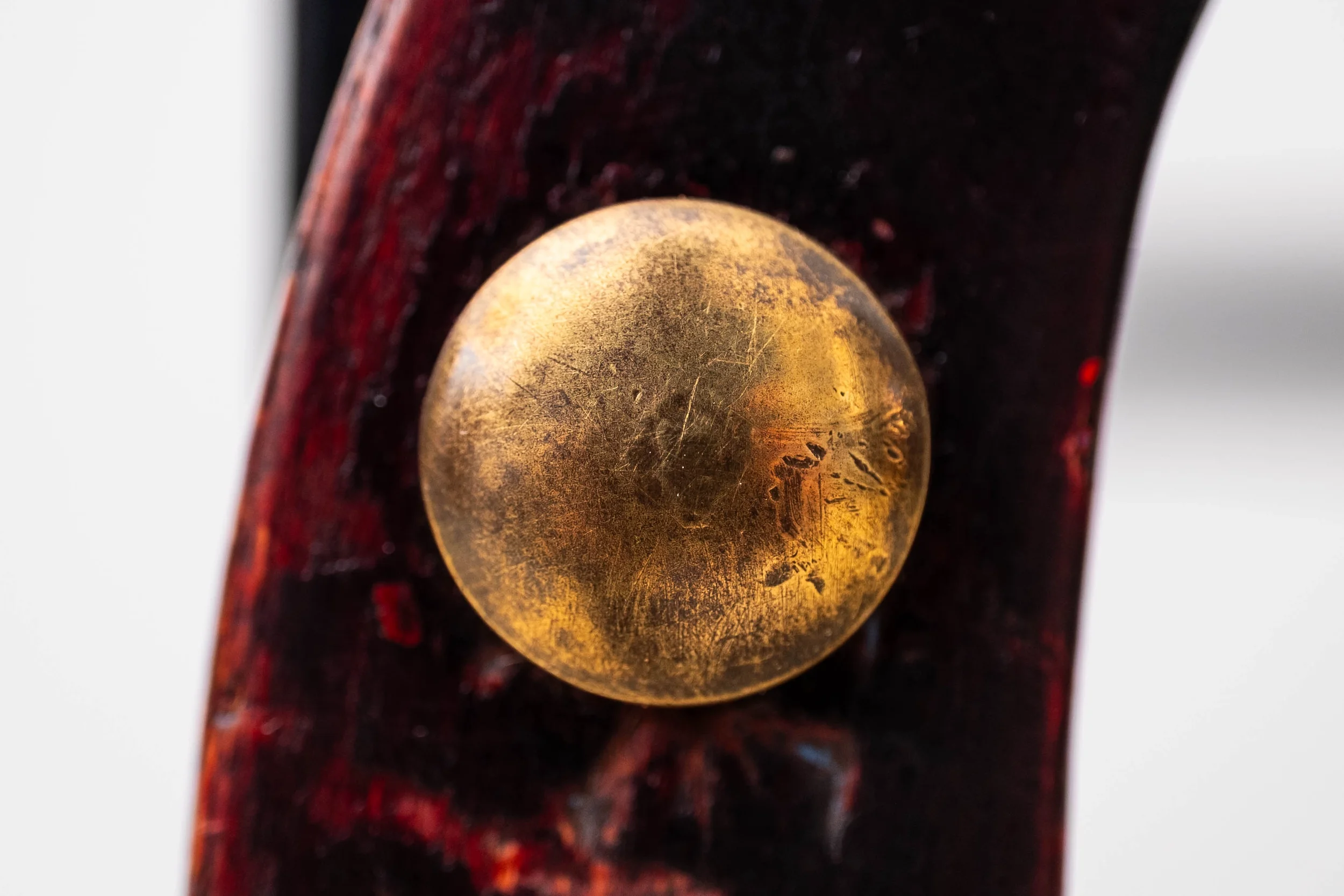
Executed by the renowned Viennese workshop of Friedrich Otto Schmidt, the chairs unite craftsmanship and vision with exceptional refinement. Schmidt’s atelier, closely tied to the Secession and its architects, translated Olbrich’s drawings into physical form with precision and sensitivity. The oak frames, expertly conserved, retain their original integrity: the grain of the wood speaks softly of age, and the structure preserves the material honesty that defined Secessionist design. The brass elements—cleaned, not stripped of time—catch light with a quiet, golden warmth, echoing the optimism of 1898 without betraying their patina.
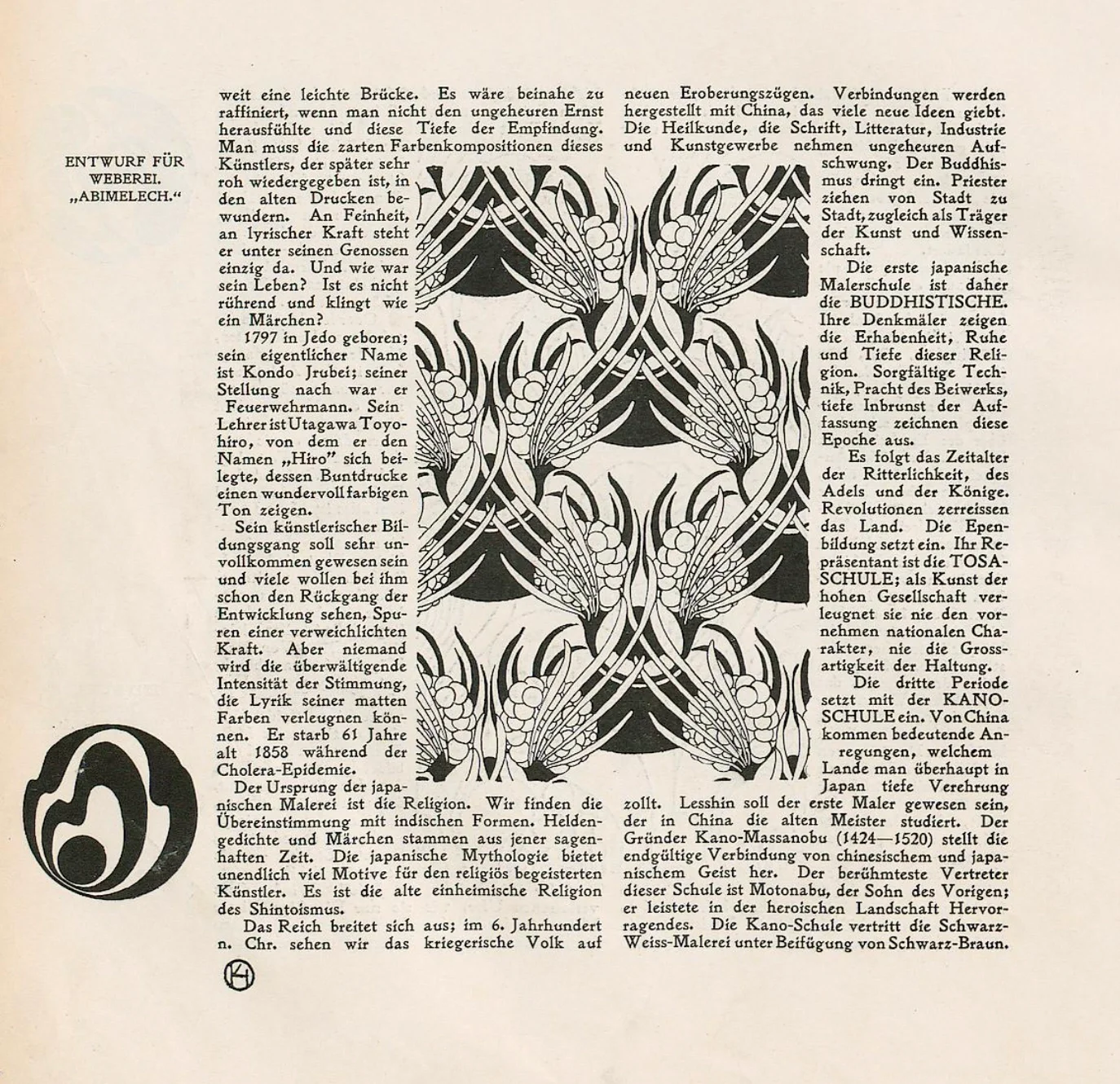
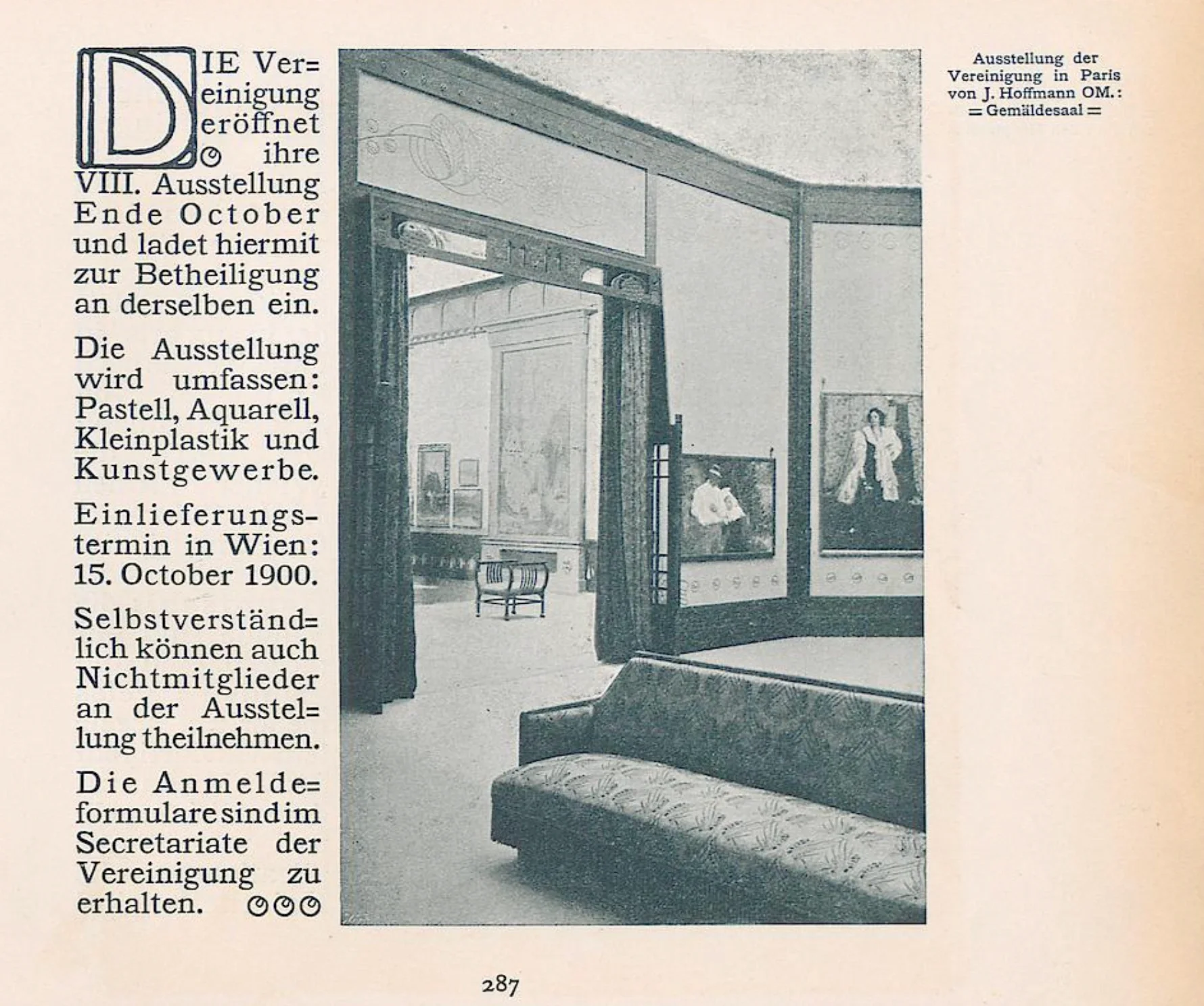
Draped across the seats is a textile as rare as the chairs themselves: Koloman Moser’s “Abimelech,” designed in 1899 for Backhausen & Söhne. The fabric carries its own history. It was presented 1900 at the Paris World Exhibition (used there for a curtain and a sofa) as well as at the 8. Secession Exhibition in „Saal 7“, decorated by Prof. Josef Hoffmann — its only two documented historical applications. No further uses are known, and the pattern does not appear in the Backhausen archive. For this project, the design was rewoven exclusively from Moser’s original drawing, revived through masterful contemporary craftsmanship.
The name “Abimelech” adds another layer of significance. Translated as “Father of the King,” it infuses the chairs with symbolic dignity. Combined with their tall, throne-like backs, the fabric’s meaning deepens their presence: they appear not merely as seating, but as objects of quiet authority—serene, elevated, sovereign. In the convergence of form, material, name, and intention, the chairs transcend functionality. They become artefacts in which artistic vision, symbolism, and craftsmanship align with striking harmony.
Presented as the inaugural object of Gallery Unum, these armchairs take their place in purposeful solitude. In a space dedicated to the contemplation of a single work, their qualities unfold without distraction: the rarity of Austrian Olbrich pieces, the architectural calm of their silhouette, the aura of Ver Sacrum, the singular textile born only three times — twice in 1900, once now. Seen alone, they reveal their full eloquence. They do not simply occupy a room; they define it. They create a moment of stillness in which the viewer can sense the transformation of an era—when Vienna stepped into modernity, when artists sought purity of form, and when the Secession proclaimed with conviction that art should enter every corner of life.
In the silence of a single-object exhibition, these chairs speak with clarity. They are the distilled essence of a turning point: rare, radiant, and grounded in the belief that renewal—like spring—arrives not loudly, but with a steady, unmistakable presence.
Literature: Ver Sacrum, 1st Year, 1898, p. 26 / Dekorative Kunst, Vol. 2, 1898, pp. 260–261 / Catalogue of the 2nd Exhibition of the Association of Austrian Artists, 1898, Vienna, pp. 2, 38 / Ver Sacrum, 1898, Issue XI / Deutsche Kunst und Dekoration, Vol. 3, 1898–1899, pp. 208–209 / Ver Sacrum, 1898, Special Issue, Klimt, Pallas Athene, p. 2 / Ver Sacrum, Issue 4, 1899, p. 14 / Ver Sacrum, Issue 19, 1900, pp. 287–289 / The Viennese Secession, Victoria Charles, Klaus Carl, 2011, p. 133
The title image and photo 4 of the slideshow presents an AI-assisted colorization of the original black-and-white photograph dating from 1898. For illustrative purposes, one of the recently restored chairs has been digitally integrated into the historical image to suggest how the room may have appeared at the time.
TO BE UNVEILED
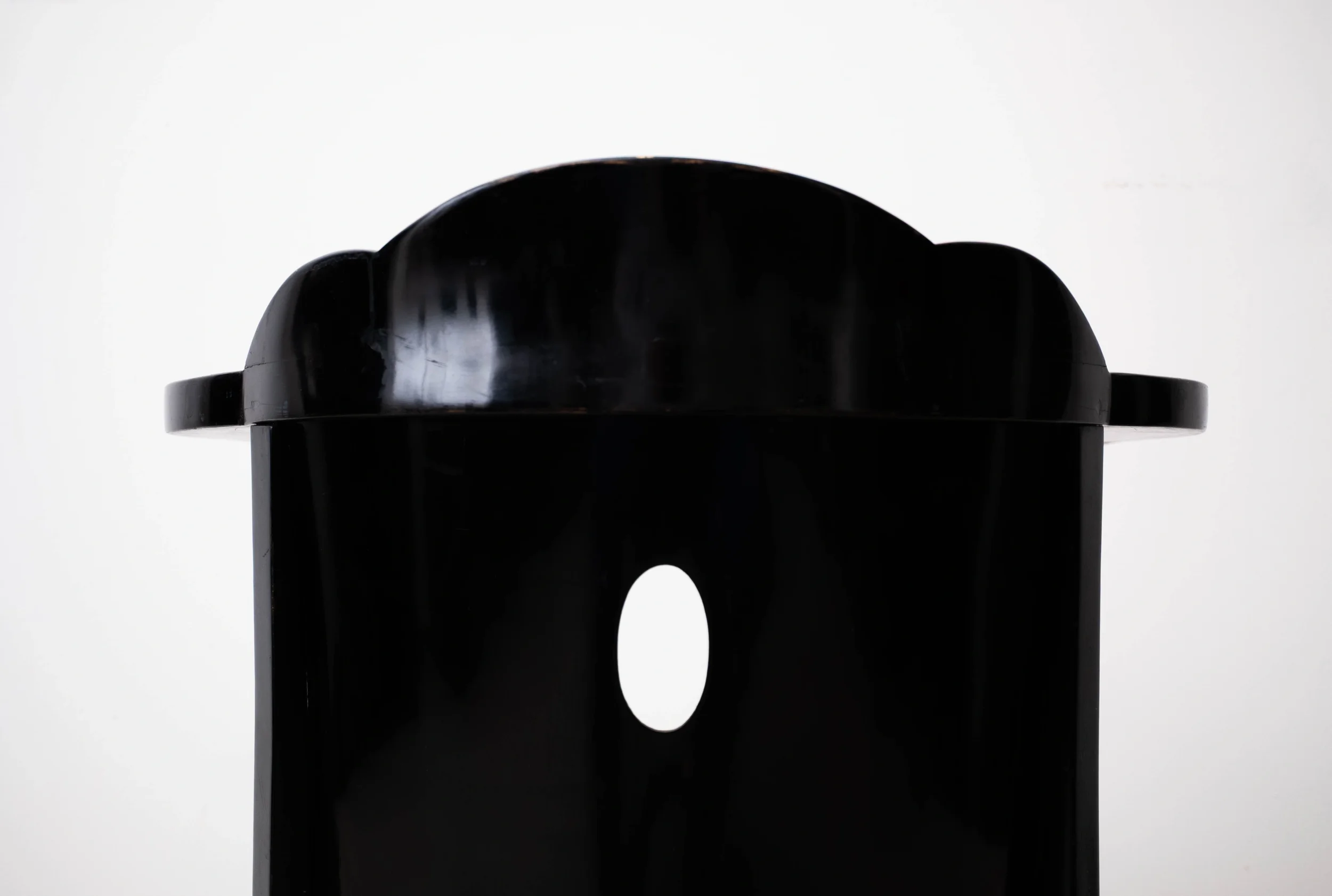
Prof. Josef Hoffmann - Armchair
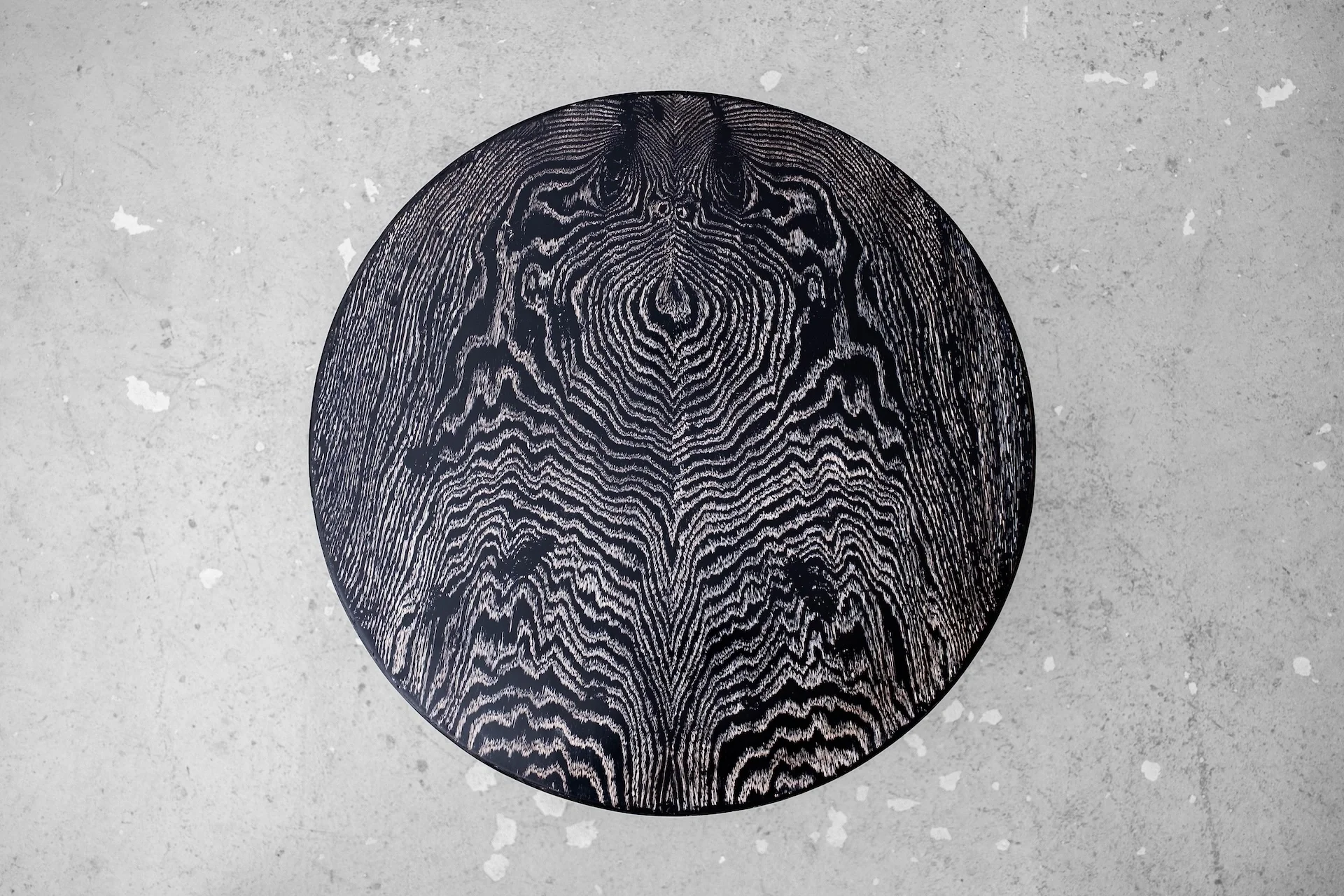
Marcel Kammerer (School Otto Wagner) - Table
Karl Bräuer (School Josef Hoffmann) - Table
ABOUT GALLERY UNUM
GALLERY UNUM is devoted to the art of singular attention. Only one object is presented at a time. A new work enters the space only after the previous one has found its new home. This deliberate reduction creates a museal condition: calm, focused, and uncompromised. Each piece is given its own stage — free from distraction, comparison, or excess — allowing its form, material, and history to unfold fully. The gallery becomes a space of contemplation rather than accumulation. GALLERY UNUM’s approach is shaped by years of experience in the art and design market, encompassing dealership, curation, and the sourcing of exceptional works. In-depth knowledge of provenance, historical context, and market value ensures that every object presented is both rare and significant, grounded in professional expertise and market insight. A long-standing fascination with the decorative arts — particularly the early viennese Secession (between 1897-1903), the geometric discipline of the Wiener Werkstätte, and the school of Prof. Josef Hoffmann — has formed a refined sense for proportion and form. This sensibility is further informed by the clarity of modern product design, guided by Dieter Rams’s principle “less, but better.”
Curation at GALLERY UNUM is not defined by quantity, but by presence. Time slows, perception sharpens, and the object is encountered in silence and clarity.
This is not a rotation.
It’s a moment.
THE ART OF ONE